How Many Photos Should a Real Estate Listing Have?
For an ordinary single-family home, around 25–35 carefully selected images is a useful planning range. Smaller properties may need fewer, while larger homes with additional rooms, outdoor amenities, or acreage may need more. The goal is to give buyers a clear understanding of the property without making them scroll through repetitive views.
The right real estate listing photo count depends on what the home has to show, where the listing will appear, and how well each image answers a buyer’s question. A beautiful kitchen deserves attention, but five nearly identical kitchen photographs rarely explain more than two thoughtfully chosen angles.
This guide explains how to plan your gallery, decide which pictures deserve a place, and combine photography with other useful listing media.
How Many Photos Should a Real Estate Listing Have by Property Type?
Use the following ranges as editorial planning guidelines, rather than mandatory MLS requirements or proven sales thresholds.
| Property type | Suggested planning range | Coverage priorities |
|---|---|---|
| Studio or small one-bedroom condo | 12–20 photos | Main living space, kitchen, bedroom, bathroom, exterior, relevant amenities |
| Larger condo or townhouse | 18–28 photos | Every main room, layout connections, outdoor space, parking where relevant |
| Typical single-family home | 25–35 photos | Bedrooms, bathrooms, main living areas, front and rear exterior |
| Large home with multiple living areas | 30–45 photos | Additional rooms, finished lower levels, outdoor features, useful second angles |
| Luxury home, acreage, or multiple buildings | 35–50 or more when justified | Distinctive architecture, grounds, amenities, accessory buildings, setting |
A compact home should not be stretched into a 40-image gallery simply because the photography package includes that many files. Equally, a substantial property should not lose important coverage to fit an arbitrary 25-photo target.
When reviewing how many photos should a real estate listing have, start with the spaces buyers need to understand. Let the final number follow that coverage.
You can explore TourDSpace’s real estate photography to see how professional property images can present different rooms and architectural features.
What Does Zillow’s Photo-Count Guidance Actually Mean?
Zillow’s published seller photography guide identifies 22–27 pictures as an ideal range based on its research. This is a useful reference point, but the guide dates to 2019 and should not be treated as a universal rule for every property today.
The same guide discusses longer selling times among listings with higher photo counts and notes that those homes were also more expensive. That distinction matters: an association between photo count and selling time does not establish that adding another photograph causes a home to sell more slowly.
The practical lesson is to avoid assuming that more pictures automatically produce better results. Pricing, condition, location, demand, and presentation all affect a listing’s performance.
For the original guidance, see Zillow’s real estate photography tips. Use that reference alongside the property’s actual needs, rather than treating 27 as an absolute ceiling.
Build a Shot List Before Choosing a Final Photo Count
A useful way to answer how many photos should a real estate listing have is to create a room-by-room coverage plan before the shoot.
List the rooms first. Then add exterior spaces and features that buyers could not understand from the interior photographs alone. Finally, identify where a second angle will reveal something important, such as the relationship between the kitchen and family room.
The following example illustrates a 28-photo gallery for a three-bedroom, two-bathroom home. It is a planning example, not a description of a completed TourDSpace project.
| Space or feature | Example allocation |
|---|---|
| Front exterior and entrance | 3 |
| Living room | 3 |
| Kitchen | 3 |
| Dining area and open-plan connection | 2 |
| Primary bedroom | 2 |
| Two additional bedrooms | 2 |
| Two bathrooms | 2 |
| Dedicated office | 1 |
| Laundry room | 1 |
| Backyard and patio | 4 |
| Useful aerial views | 2 |
| Distinctive built-in or architectural feature | 1 |
| Twilight exterior | 2 |
| Total | 28 |
If the property has no office or suitable aerial coverage, remove those allocations. If it has a separate guest suite, include that space instead.
Before the appointment, use the real estate photography checklist to organize access and preparation so important areas are ready to photograph.
Which Real Estate Listing Photos Should You Include?
Main living spaces and the kitchen
Living rooms, kitchens, and dining areas help buyers imagine everyday life in the home. Show the usable space, window placement, major fixtures, and connections between rooms.
For an open-plan property, one image may explain the overall arrangement while another shows the kitchen’s work surfaces and storage. Both deserve a place because they answer different questions.
Avoid choosing images solely because they look decorative. A close-up of a flower arrangement may be attractive, but it usually tells buyers less than a clear view of the room.
Bedrooms, bathrooms, and functional rooms
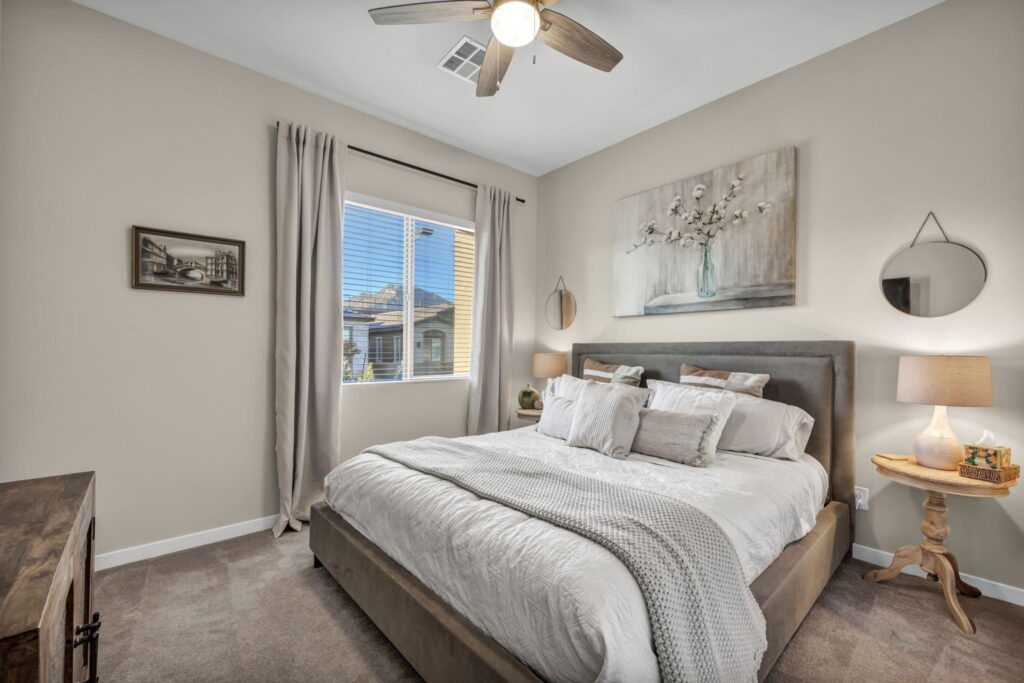
Include clear coverage of each bedroom and bathroom wherever access and privacy allow. Buyers should be able to distinguish the primary suite from secondary rooms.
Functional spaces can also matter. A dedicated laundry room, substantial garage, finished basement, or home office may deserve a photograph when it adds useful information.
Do not leave out a major room simply because it is less photogenic. Listing photography should help buyers understand the actual property, including its practical spaces.
Exterior areas and distinctive features
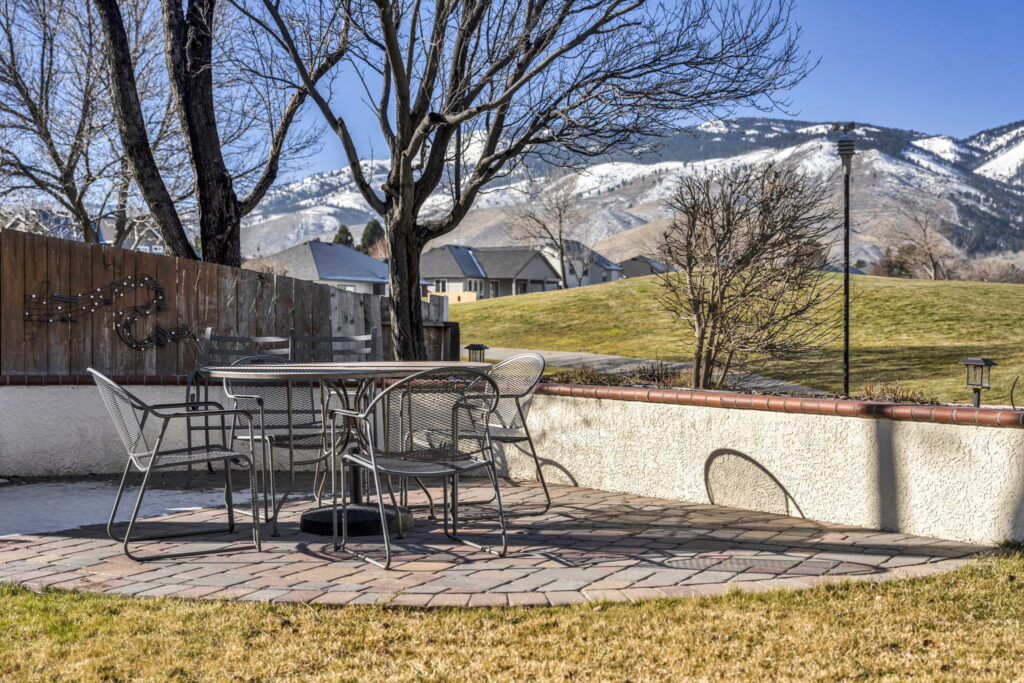
Show the front of the home, its outdoor living space, and features that make the property different. Depending on the listing, these might include a covered patio, pool, workshop, guesthouse, or mountain view.
A feature should earn its place by adding information. Several photographs of the same pool from nearly identical positions are less useful than a combination showing the pool, surrounding patio, and connection to the home.
The strongest home listing photography balances attractive presentation with clear, accurate coverage.
How Many Photos Should a Real Estate Listing Have in the MLS?
The number of MLS photos permitted is separate from the number a property actually needs. Each MLS can have its own upload limits, required views, file specifications, and rules for edited images.
Before uploading, ask the listing agent to check the current rules for the relevant system. Confirm the maximum photo count, any primary-image requirements, and how floor plans or other media are handled.
Also review requirements for branding, image rights, and digitally altered photographs. Do not assume rules from one city apply to another.
If the system allows more images than your property needs, leave unused slots. If the limit is restrictive, prioritize complete room coverage and the most informative exterior views.
After publication, inspect the listing on the destination portals. Confirm that the intended lead image appears correctly, the sequence makes sense, and important photos have not been omitted during syndication.
Put the Gallery in an Order Buyers Can Follow
Choosing how many photos should a real estate listing have is only part of the job. The sequence should help viewers move through the home without repeatedly changing direction.
Start with a strong, accurate image that reads clearly at thumbnail size and meets the MLS’s primary-photo requirements. For many houses, this will be an exterior photograph.
Next, introduce the principal living spaces and kitchen. Continue into bedrooms, bathrooms, and additional rooms, then show the backyard and other outdoor features.
A sensible sequence might follow this order:
- Front exterior or another permitted lead image.
- Main living room and kitchen.
- Dining space and connections between main rooms.
- Primary bedroom and bathroom.
- Secondary bedrooms and bathrooms.
- Office, laundry, garage, or finished basement.
- Backyard, patio, pool, or accessory buildings.
- Aerial views and selected twilight images.
Adapt the order when the property’s layout calls for it. Keep each room’s photographs together so buyers can understand the spaces without mentally rebuilding the gallery.
When Extra Images Help—and When They Become Repetitive
A second photograph is worthwhile when it changes the buyer’s understanding. It might reveal storage hidden behind the first camera position, show access to an outdoor terrace, or explain an adjoining room.
A third or fourth angle needs a stronger reason. Before keeping it, ask what new information it provides.
Compare similar images side by side. Retain the one with the clearest composition, most useful coverage, and accurate representation of the space.
Remove accidental duplicates, blurry frames, and images dominated by distractions. However, do not remove important room coverage merely to produce a shorter gallery.
A real estate listing photographer can capture more images during the session than the listing ultimately uses. The delivered collection and published gallery do not have to contain the same number of photographs.
Should Drone and Twilight Images Count Toward the Total?
Aerial and twilight photographs are still listing images when uploaded to the photo gallery, so plan room coverage and specialty images together.
Useful aerial views can explain a property’s setting, access, outdoor arrangement, or relationship to surrounding streets. They are especially relevant when the grounds are difficult to understand from ground level. An aerial photograph should not be presented as a substitute for a survey or verified boundary information.
Explore drone real estate photography when the property’s setting contributes meaningfully to the marketing story.
Twilight photographs can show exterior lighting, illuminated windows, and outdoor spaces after sunset. One or two distinct views may be sufficient for a straightforward home; a property with several outdoor living areas might justify additional coverage.
TourDSpace’s twilight photography can complement daytime coverage where evening presentation is relevant.
Do Video, Virtual Tours, and Floor Plans Replace Listing Photos?
Photos provide a quick overview, but they cannot answer every question about movement, dimensions, and room connections.
Real estate videography can show a continuous journey through the property and connect indoor and outdoor spaces. Use video to add context rather than filling the photo gallery with many similar transition shots.
Matterport 3D virtual tours let viewers explore spaces interactively. They can be particularly useful for buyers who want to revisit room connections before scheduling a showing.
Real estate floor plan services provide another way to explain the arrangement. A plan helps viewers understand where rooms sit relative to one another, while photographs communicate appearance and condition.
These formats complement real estate listing photography. Buyers should still have a clear photo gallery, even when the listing includes additional media.
How Many Photos Should a Real Estate Listing Have When the Home Is Vacant?
Vacant properties still need complete coverage. An empty room may require a carefully selected second view to make its shape and connection to adjoining spaces clear.
However, photographing an empty bedroom from five positions does not necessarily make it easier to understand. Consider what each image contributes.
Virtual staging services can help illustrate a possible furniture arrangement in selected rooms. Digitally staged images should be identified clearly and used in line with the relevant MLS and platform rules.
Keep the presentation accurate. Furniture visualization should not imply that permanent fixtures, room dimensions, or structural features are different from reality. Consider retaining an unstaged view alongside the staged version so buyers can see the existing space.
Prepare the Home and Schedule for Suitable Light
A larger gallery cannot compensate for cluttered counters, blocked windows, or rooms that are not ready for the photographer.
Prepare the entire property before the appointment. Clear surfaces, arrange furniture to preserve walkways, secure pets, and make requested rooms accessible. Check mirrors and reflective surfaces for distracting items.
Read how to prepare a home for real estate photography for a practical preparation plan.
Lighting also influences which images are worth keeping. Harsh exterior shadows, strong window glare, and inconsistent interior lighting can make otherwise useful views difficult to read.
Our guide to the best time of day for real estate photos explains why orientation, weather, and the desired exterior appearance should inform scheduling.
Plan Coverage Around the Property and Local Market
TourDSpace Productions is based in Nevada and serves Reno/Tahoe, Las Vegas, Sacramento, Denver, Pittsburgh, and Cleveland in Northeast Ohio.
These locations provide different property settings, but the gallery should respond to the individual home rather than rely on assumptions about the city.
For a Las Vegas property with a pool and covered patio, reserve images for both features. For a Reno/Tahoe listing with a meaningful mountain view, show that view in context. A Sacramento home with a generous garden may need more exterior coverage than a compact condo.
A Denver listing with a finished lower level needs photographs that explain that additional living space. A Pittsburgh or Cleveland home with distinctive architecture may benefit from an informative exterior angle and interior coverage of original details.
The same question—how many photos should a real estate listing have—can therefore produce different answers even among homes with similar bedroom counts.
TourDSpace’s Las Vegas office is located at 10175 Spring Mountain Road #1038, Las Vegas, NV 89117. When planning a shoot, share the room count, notable amenities, intended marketing channels, and any access limitations.
For more preparation and marketing advice, visit the TourDSpace blog.
Frequently Asked Questions
1. How many photos should a real estate listing have?
Around 25–35 selected photographs is a useful planning range for a typical single-family home. Adjust downward for compact properties and upward for additional rooms, acreage, or distinctive amenities. Complete coverage matters more than reaching an exact total.
2. Is 20 photos enough for a home listing?
It can be enough for a small home, condo, or townhouse if the gallery covers all important rooms and exterior features. Review what is missing before adding more. Twenty informative images can be more useful than a longer gallery containing repetitive views.
3. Is 50 photos too many for a real estate listing?
Not necessarily. A large estate, multiple buildings, or extensive outdoor amenities may justify 50 photographs. A small apartment usually will not. Keep an image when it provides information that buyers would otherwise miss, and check the applicable upload limit.
4. Does every room need a listing photo?
Aim to show every principal room, including bedrooms and bathrooms, wherever practical. Include secondary spaces when they help buyers understand the property. If access prevents coverage of a room, discuss that limitation with the agent rather than substituting misleading images.
5. What should the first listing photograph show?
Use an attractive, accurate image that is easy to understand at a small size and complies with the MLS’s lead-image rules. A clear front exterior often works well. Avoid a decorative detail that gives buyers little information about the home.
6. Do drone photos count as MLS photos?
Aerial photographs uploaded to the listing’s photo gallery generally occupy photo slots like other still images. Verify the rules of the relevant system. Include them when they explain the setting or grounds, and avoid several aerial views that repeat the same information.
7. Can I publish every image my photographer delivers?
You can select from the delivered collection according to the agreed usage rights and platform requirements, but publishing every file is not always useful. Review coverage, remove duplicates, and check the final gallery on a phone before deciding what to keep.
8. Should I hire a professional for home shots real estate photography?
When comparing providers under searches such as “home shots real estate photography,” look for accurate interiors, consistent editing, and clear room coverage. Ask about deliverables, usage rights, scheduling, and optional media. A professional should help you choose useful views rather than promise results based on quantity alone.
Choose a Complete Gallery for Your Next Listing
How many photos should a real estate listing have? Start with the rooms and features buyers need to see, choose images that explain them clearly, and remove views that add little information.
A well-planned gallery gives the property a coherent introduction. Photographs show appearance, while video, tours, and floor plans can answer additional questions about the space.
Share your property’s details with TourDSpace Productions to plan listing photography and supporting media around the home’s actual needs.